Customer Follow-Up
How to Follow Up With Customers on WhatsApp Without Being Pushy
A practical guide to customer follow-up on WhatsApp, including timing, message structure and examples that feel personal instead of spammy.
Following up is one of the simplest ways to recover sales, yet many businesses avoid it because they do not want to sound desperate or annoy customers.
The difference between a helpful follow-up and an irritating message usually comes down to timing, context and relevance. A customer should feel that you remembered them—not that they were added to a broadcast list.
1. Follow up because there is a reason
Do not message a customer simply because your sales are slow. Start with a reason connected to the customer’s previous interaction.
Maybe they asked about an item that was out of stock. Maybe they said they would confirm after payday. Maybe they normally buy every month and have not returned. Maybe an order was delivered and you want to know whether everything was okay.
- An item they wanted is back in stock
- A promised callback or payment date has arrived
- It is around the time they normally reorder
- A delivery was completed and you want feedback
- A quotation or enquiry has been waiting for a response
2. Use the customer’s context
Generic messages feel like advertising. Context makes a follow-up feel personal.
Instead of “Hello, we have new products available,” refer to the thing the customer actually cared about. A short message such as “Hi Amaka, the black size 40 you asked about is back in stock. Would you like me to keep one for you?” is specific and easy to answer.
3. Make the next step easy
A follow-up works better when the customer knows exactly how to respond. Avoid paragraphs with several offers and multiple questions.
Ask one simple question: Should I reserve it? Would you like the updated price? Should I send the account details? Would tomorrow work for delivery?
4. Space follow-ups properly
Sending three messages in one afternoon is not persistence. It is pressure. Give customers time to respond.
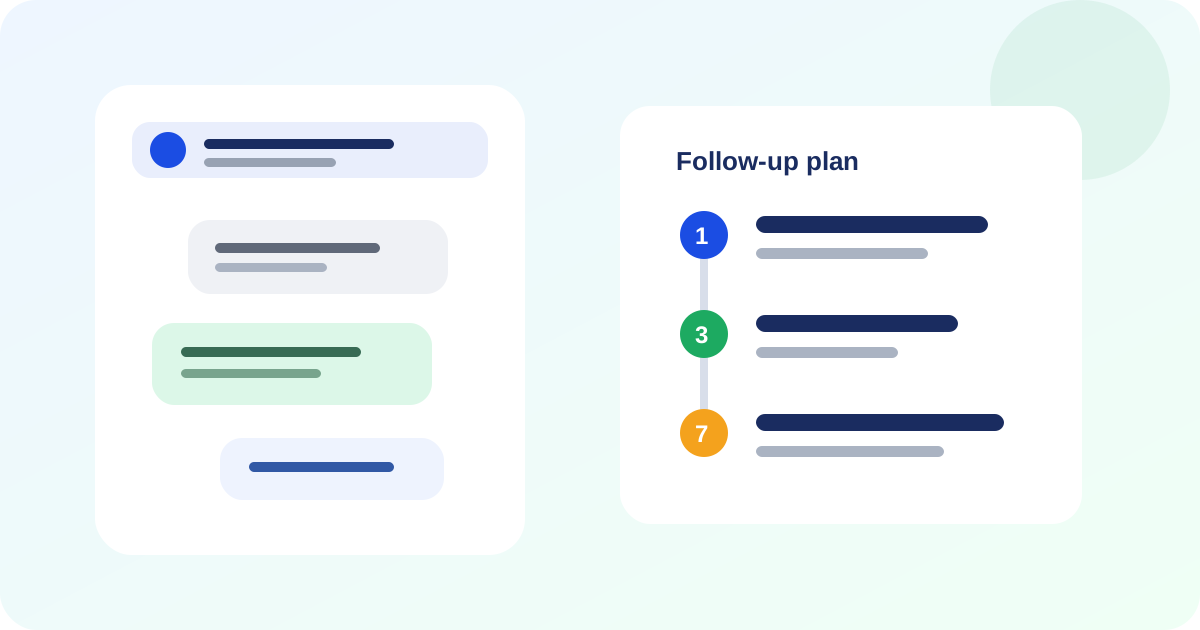
For many everyday sales conversations, a simple pattern such as Day 1, Day 3 and Day 7 is enough. High-value purchases may need longer gaps. Time-sensitive products may need shorter ones.
The important thing is to have a system so the timing is deliberate rather than random.
5. Stop when the customer gives you an answer
If the customer says they are no longer interested, stop following up about that offer. If they ask not to receive promotions, respect that choice. A good follow-up system should make it easy to record preferences so the whole team knows.
Useful WhatsApp follow-up examples
- After an enquiry: “Hi Tunde, just checking back on the office chair you asked about yesterday. Would you like me to send the available colours?”
- After sending a price: “Hi Ada, did you get the quote I sent? I can clarify anything before you decide.”
- Restock: “Hi Kemi, the shade you wanted is back in stock. Would you like me to reserve one?”
- Repeat purchase: “Hi Chinedu, it has been about a month since your last order. Are you running low, or are you still covered?”
- After delivery: “Hi Sade, I wanted to check that your order arrived well. Is everything okay with it?”
- Lost lead: “Hi Emeka, you asked us about the package a while ago. Are you still considering it, or should I close the enquiry for now?”
How to stay consistent without relying on memory
The hardest part of follow-up is not writing the message. It is remembering who needs a message today.
A customer follow-up system such as ReConnect gives the team a daily list of due and overdue follow-ups, keeps each customer’s context beside the task, and records the sales that come from those conversations.
That means follow-up becomes a repeatable business process instead of something that happens only when the owner remembers.